
ACL Injury Rehabilitation Melbourne | Basketball Knee Injury Physio | Keilor Road Physiotherapy
▫️Written by John Keller
✅ Reviewed by Dr. Jenny Hynes on February 17th, 2026
ACL Injury Rehabilitation for Basketball Players — Quick Answer
What Are ACL Injuries and Why Are They Common in Basketball?
ACL Rehabilitation for Basketball Players in Melbourne’s North-West
Meet the Physiotherapists Supporting ACL Rehabilitation at Keilor Road Physiotherapy
ACL Injury Rehabilitation FAQs
ACL Injuries in Basketball Players: Rehabilitation, Performance & Return to Sport in Melbourne
Basketball demands explosive power, rapid acceleration, repeated jumping and constant changes of direction. While these qualities make the sport exciting, they also place enormous stress on the knee — particularly the anterior cruciate ligament (ACL).
ACL injuries remain one of the most significant injuries affecting basketball athletes, often requiring long rehabilitation periods and careful performance rebuilding before returning to competition.
At Keilor Road Physiotherapy, Melbourne’s knee treatment specialists, our approach to ACL rehabilitation in Melbourne goes beyond traditional rehab. We combine physiotherapy, athletic development and objective strength testing using AxIT technology to help basketball players safely return to sport stronger and more resilient.
ACL Injury Rehabilitation for Basketball Players — Quick Answer
ACL injuries in basketball most commonly occur during non-contact movements such as cutting, landing or sudden direction changes. Successful rehabilitation requires restoring strength, movement control and athletic performance — not just reducing pain. Most basketball players require 9–12 months of structured physiotherapy before safely returning to competition. At Keilor Road Physiotherapy in Melbourne, ACL rehabilitation includes progressive strength training, movement retraining and objective AxIT strength testing to reduce reinjury risk and support a safe return to sport.
What Are ACL Injuries and Why Are They Common in Basketball?
The Physical Demands of Basketball
Basketball is far more physically demanding than many people realise. Research shows players sustain approximately 1.5 injuries per 1000 hours of combined training and competition, highlighting the importance of injury prevention and structured rehabilitation (Stojanović et al., 2018)..
During a typical game, basketball athletes may:
Cover up to 6 kilometres per game
Perform up to 100 sprints, often over short 5–10 metre accelerations
Complete approximately 400 change-of-direction movements
Jump 40–50 times per game
Perform repeated rapid deceleration and landing tasks
Around 80% of basketball injuries occur in the lower limbs, with persistent injuries most commonly affecting the ankle and knee (Drakos et al., 2010).
These repeated explosive and rotational loads explain why ACL injuries remain one of the most serious injuries in the sport. ACL injuries are particularly impactful because they disrupt both knee stability and athletic performance, often requiring 9–12 months before safe return to sport (Ardern et al., 2014).
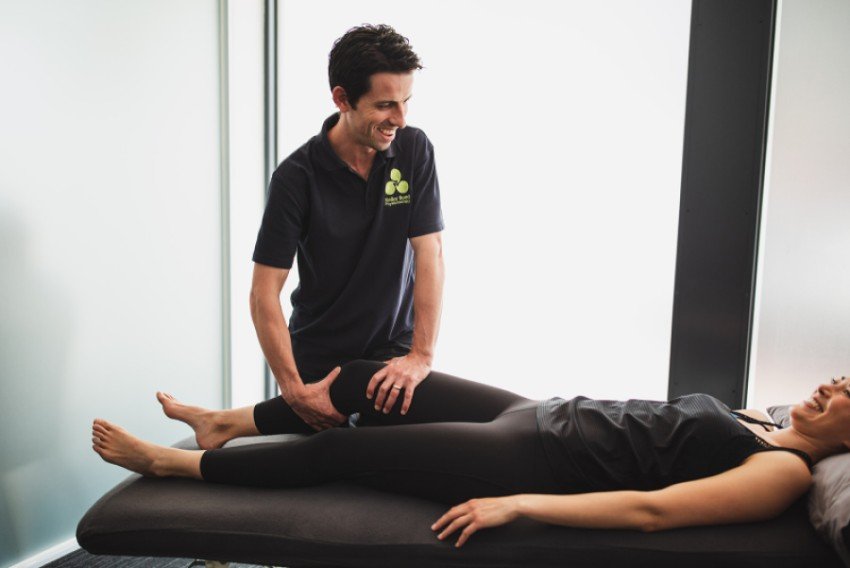
Melbournes best ACL rehabilitation.
Common Injuries in Basketball Players
While ACL tears receive significant attention, basketball players frequently experience a range of lower limb injuries, including:
Hamstring and calf muscle tears
Acute and recurrent ankle sprains
Syndesmosis (high ankle) injuries
Achilles tendinopathy and Achilles ruptures
Plantar fasciopathy
Bone stress injuries and stress fractures
Patellar tendinopathy (“jumper’s knee”)
Osgood-Schlatter disease in adolescent athletes
Patellofemoral joint overload and anterior knee pain
Anterior Cruciate Ligament (ACL) ruptures
These injuries often share common contributing factors — workload spikes, movement mechanics, strength deficits, and reduced neuromuscular control (Bittencourt et al., 2016).
Why ACL Injuries Occur in Basketball
Research consistently shows most ACL injuries are non-contact, occurring during cutting, landing or deceleration tasks rather than collisions (Krosshaug et al., 2007).
Typical ACL Injury Mechanism
The foot plants outside the athlete’s base of support
The athlete fails to hinge through the hips
The torso remains too upright
The knee collapses inward (valgus position)
The trunk shifts laterally
Rotational and shear forces overload the ACL
At this moment, strong thigh muscle contractions further increase ligament stress, leading to rupture.
This highlights an important point:
👉 ACL injuries are not just bad luck — they are strongly linked to movement proficiency and athletic capacity (Hewett et al., 2005).
Change of Direction and ACL Injury Risk in Basketball
Basketball players perform hundreds of cutting and directional changes every game. Change of direction (COD) is not simply fitness — it is a learned athletic skill.
Efficient COD mechanics allow athletes to:
Move faster than opponents
Reduce knee joint stress
Improve acceleration and deceleration control
Lower ACL injury risk
Poor mechanics increase knee loading and dramatically raise injury risk (Dos’Santos et al., 2019).
Key Components of Safe Change of Direction
At Keilor Road Physiotherapy, we coach athletes to develop:
Strong hip hinge mechanics
Knee alignment control
Trunk stability
Deceleration strength
Reactive neuromuscular control
Single-leg landing proficiency
Improving these skills not only protects the ACL but also enhances on-court performance.
ACL Rehabilitation for Basketball Players: A Performance-Based Approach
Traditional rehabilitation often focuses only on pain reduction and range of motion. However, basketball athletes require much more (van Melick et al., 2016).
Modern ACL rehabilitation must restore:
✅ Strength
✅ Power
✅ Speed
✅ Agility
✅ Confidence
✅ Sport-specific movement skill
Our Performance-Based ACL Rehab Approach
At Keilor Road Physiotherapy, ACL rehabilitation progresses through structured stages:
Early Rehabiliation Phase
Swelling and pain management
Restore knee movement
Early muscle activation
Walking and load tolerance
Strength Development Phase
Quadriceps and hamstring strength rebuilding
Hip and trunk control
Single-leg stability training
Athletic Reconditioning Phase
Jump and landing retraining
Deceleration mechanics
Change-of-direction drills
Basketball-specific movement patterns
Return-to-Sport Testing
Using objective strength testing with AxIT technology, we measure:
Limb symmetry
Force production
Power output
Readiness for return to play
No guesswork — just measurable performance benchmarks.
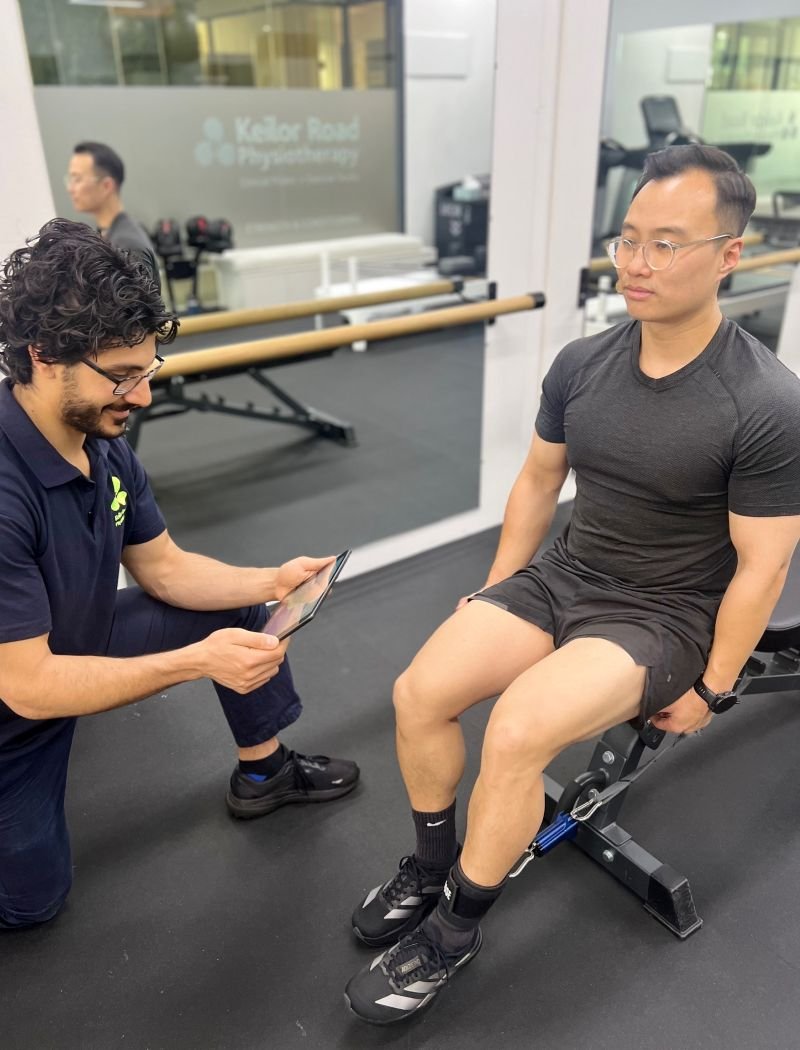
AxIT strength testing for ACL rehabilitation.
Why Strength Testing Matters After ACL Injury? (And How AxIT Helps)
One of the biggest risks after ACL reconstruction is returning to sport before strength has fully recovered.
Risks of Returning Too Early
Studies show:
Second ACL injuries occur in up to 1 in 3 young athletes returning to sport Wiggins et al., 2016).
Returning before 9 months can increase reinjury risk up to sevenfold (Grindem et al., 2016).
Strength asymmetries alter landing mechanics and increase knee loading (Palmieri-Smith et al., 2008).
Athletes often feel ready long before objective strength has normalised.
Traditional rehab decisions based only on time or symptoms can miss hidden deficits. Research shows athletes may achieve good hop symmetry while still demonstrating large biomechanical weaknesses at the knee .
How do you know when an athlete is ready to return after ACL surgery?
Athletes should not return to basketball based on time alone. Research supports using objective strength testing, movement assessment and sport-specific performance benchmarks. At Keilor Road Physiotherapy, AxIT strength testing measures limb symmetry, force production and power output to ensure athletes meet evidence-based return-to-sport criteria and minimise reinjury risk.
How AxIT Strength Testing Guides ACL Rehabilitation
At Keilor Road Physiotherapy, we use AxIT force plate and strength assessment technology to objectively measure recovery.
AxIT allows us to measure:
Limb strength symmetry
Force production during single-leg tasks
Power output during jumps
Rate of force development
Deficits not visible clinically
Objective testing aligns with modern return-to-sport guidelines recommending ≥90% limb symmetry and performance benchmarks before clearance (Burgi et al., 2019).
Instead of relying on estimates, AxIT provides real data to:
✅ Identify hidden weaknesses
✅ Track progress over time
✅ Reduce reinjury risk
✅ Build athlete confidence
✅ Guide safe return to basketball
For a sport involving hundreds of explosive movements per game, measurable strength is essential.
Athletic Performance and ACL Injury Prevention
The same qualities that reduce injury risk also improve performance.
Basketball athletes who develop:
Stronger deceleration ability
Better landing mechanics
Improved hip strength
Faster directional control
often see improvements in speed, agility and vertical performance.
In other words:
Better movement equals both safer knees and better basketball (Dos’Santos et al., 2019).
Why Basketball Players Choose Keilor Road Physiotherapy
Located in Melbourne’s north-west, Keilor Road Physiotherapy works with athletes from Essendon, Niddrie, Keilor East, Airport West and surrounding suburbs.
Our difference includes:
APA-trained sports physiotherapists
Performance-based ACL rehabilitation
AxIT strength testing technology
Onsite rehabilitation gym
Basketball-specific return-to-sport programming
Individualised athlete development plans
We don’t just rehabilitate injuries — we help athletes return stronger, faster and more resilient. Our team manages ACL rehabilitation for athletes ranging from junior basketball players through to competitive runners and field sport athletes across Melbourne’s north-west.
ACL Rehabilitation in Melbourne’s North-West
Keilor Road Physiotherapy provides specialised ACL rehabilitation for basketball athletes across Melbourne’s north-west, including:
Essendon
Niddrie
Keilor East
Airport West
Aberfeldie
Moonee Ponds
Strathmore
Tullamarine
Our clinic regularly works with junior domestic players, representative athletes and local basketball competitors requiring structured return-to-sport rehabilitation following ACL injury.
Located conveniently on Keilor Road, our physiotherapists combine evidence-based rehabilitation, AxIT strength testing and sport-specific programming to help Melbourne basketball players safely return to performance.
Successful ACL rehabilitation requires more than protocols — it requires clinical experience, performance understanding and sport-specific decision making. At Keilor Road Physiotherapy, basketball athletes are guided by physiotherapists with strong backgrounds in sports rehabilitation, athletic performance and return-to-play management.
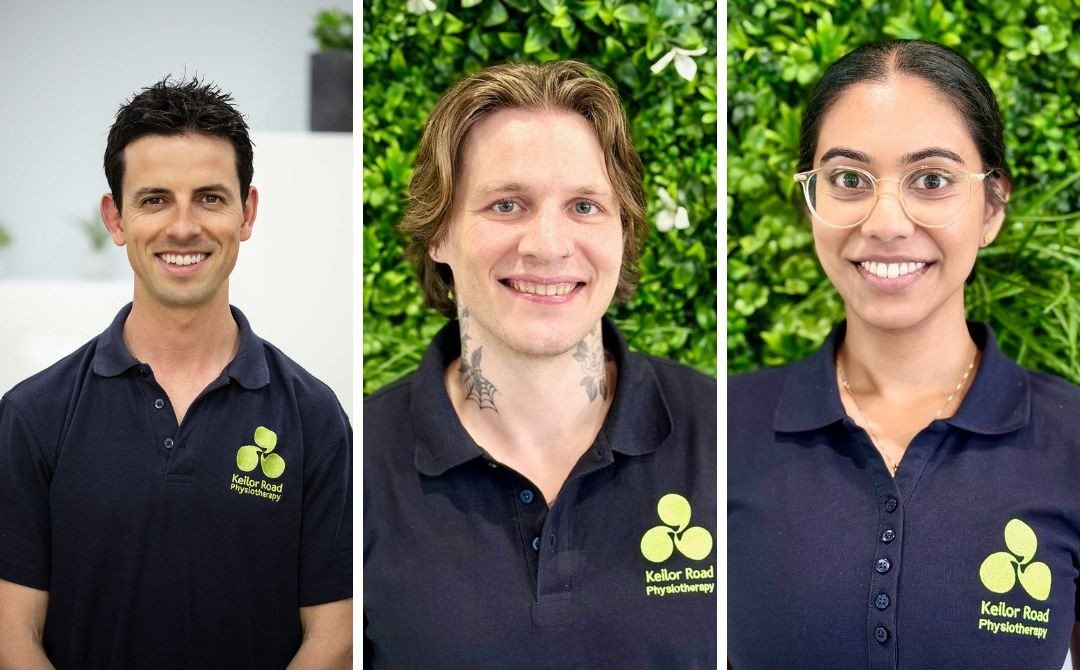
Your ACL rehab team at Keilor Road Physiotherapy. Robbie Webb, Dan Gilham and Rishi Yerra.
Meet the Physiotherapists Supporting ACL Rehabilitation at Keilor Road Physiotherapy
Robbie Webb — APA Titled Sports & Exercise Physiotherapist
Robbie Webb is the lead running and athletic performance physiotherapist at Keilor Road Physiotherapy and an APA Titled Sports & Exercise Physiotherapist, a designation achieved by only a small percentage of physiotherapists in Australia.
Robbie has completed the Melbourne Marathon four times, including a personal best under 3 hours 10 minutes — placing him among a small proportion of endurance athletes capable of sustaining elite-level performance. His personal athletic experience allows him to deeply understand the physical and psychological demands athletes face during long rehabilitation journeys.
In ACL rehabilitation, Robbie focuses on:
Return-to-sport decision making
Running and change-of-direction progression
Load management for pivoting sports like basketball
Performance testing and injury risk reduction
His approach bridges the gap between clinical rehabilitation and high-level athletic performance.
Bryce De Kort — Sports Rehabilitation and Strength Development Physiotherapist
Bryce De Kort has a strong clinical interest in lower limb injuries and strength-based rehabilitation, helping athletes rebuild confidence and capacity following knee injuries.
Bryce works closely with basketball and field sport athletes to restore:
Quadriceps and hamstring strength after ACL injury
Single-leg control and stability
Jump and landing mechanics
Progressive gym-based rehabilitation
He plays a key role in guiding athletes through the middle and late stages of ACL recovery, where structured strength development becomes critical for safe return to sport.
Rishi Yerra — Movement Restoration and Athletic Performance Physiotherapist
Rishi Yerra brings a movement-focused rehabilitation approach, emphasising biomechanics, efficiency and injury prevention.
His rehabilitation philosophy centres on improving how athletes move — not just how strong they are. For basketball players recovering from ACL injury, this includes:
Movement retraining during cutting and pivoting
Hip and trunk control development
Deceleration mechanics
Neuromuscular coordination under fatigue
Rishi’s work helps athletes rebuild confidence in dynamic movements, reducing reinjury risk while enhancing on-court performance.
ACL Injury Rehabilitation FAQs
How long does ACL rehab take for basketball players?
Most athletes require 9–12 months before full return to competitive basketball, depending on strength recovery and movement quality.
Can you return to basketball after an ACL tear?
Yes. With structured physiotherapy and performance-based rehabilitation, many athletes successfully return to sport. Objective strength testing greatly improves safety.
Why is strength testing important after ACL surgery?
Strength asymmetries increase reinjury risk and alter landing mechanics. Objective testing identifies deficits that cannot be seen through observation alone.
What makes basketball ACL injuries different?
Basketball involves repeated cutting, jumping and deceleration — movements strongly linked to non-contact ACL injuries.
Do I need surgery after an ACL injury?
Not always. Some athletes manage successfully with rehabilitation alone, but decisions depend on instability, sport level and goals.
When should I start physiotherapy after an ACL injury?
Immediately. Early physiotherapy improves swelling control, muscle activation and long-term outcomes.
References:
Ardern, C. L., Taylor, N. F., Feller, J. A., & Webster, K. E. (2014). Fifty-five per cent return to competitive sport following anterior cruciate ligament reconstruction surgery: An updated systematic review and meta-analysis. British Journal of Sports Medicine, 48(21), 1543–1552. https://doi.org/10.1136/bjsports-2013-093398
Bittencourt, N. F. N., Meeuwisse, W. H., Mendonça, L. D., Nettel-Aguirre, A., Ocarino, J. M., & Fonseca, S. T. (2016). Complex systems approach for sports injuries. British Journal of Sports Medicine, 50(21), 1309–1314.
Burgi, C. R., Peters, S., Ardern, C. L., et al. (2019). Which criteria are used to clear patients to return to sport after ACL reconstruction? British Journal of Sports Medicine, 53(18), 1154–1161.
Dos’Santos, T., Thomas, C., Comfort, P., & Jones, P. A. (2019). The role of the penultimate foot contact during change of direction. Sports Medicine, 49(6), 843–860.
Drakos, M. C., Domb, B., Starkey, C., Callahan, L., & Allen, A. A. (2010). Injury in the National Basketball Association. Sports Health, 2(4), 284–290.
Grindem, H., Snyder-Mackler, L., Moksnes, H., Engebretsen, L., & Risberg, M. A. (2016). Simple decision rules reduce reinjury risk after ACL reconstruction. British Journal of Sports Medicine, 50(13), 804–808.
Hewett, T. E., Myer, G. D., & Ford, K. R. (2005). Biomechanical measures of neuromuscular control and valgus loading predict ACL injury risk. American Journal of Sports Medicine, 33(4), 492–501.
Krosshaug, T., Nakamae, A., Boden, B. P., et al. (2007). Mechanisms of ACL injury in basketball. American Journal of Sports Medicine, 35(3), 359–367.
Palmieri-Smith, R. M., Thomas, A. C., & Wojtys, E. M. (2008). Maximizing quadriceps strength after ACL reconstruction. Clinics in sports medicine, 27(3), 405–ix. https://doi.org/10.1016/j.csm.2008.02.001
Stojanović, E., Stojiljković, N., Scanlan, A. T., Dalbo, V. J., Berkelmans, D., & Milanović, Z. (2018). Activity demands and physiological responses during basketball play. Sports Medicine, 48(1), 111–135.
van Melick, N., van Cingel, R. E. H., Brooijmans, F., et al. (2016). Evidence-based clinical practice guideline for ACL rehabilitation. British Journal of Sports Medicine, 50(24), 1506–1515.
Wiggins, A. J., Grandhi, R. K., Schneider, D. K., Stanfield, D., Webster, K. E., & Myer, G. D. (2016). Risk of secondary ACL injury. American Journal of Sports Medicine, 44(7), 1861–1876.